Every exporter asks this question eventually: air or ocean? The honest answer is "it depends" — but it depends on four things you can actually measure: transit time, cost per kilogram, shipment volume, and how the freight bill compounds into your landed cost. Get those four right and the mode choice makes itself.
Transit time: the gap is bigger than most people expect
Air freight from India typically moves in 3-5 days door-to-door on major lanes like Mumbai or Delhi to New York, London, or Dubai. Ocean freight on the same lanes runs 25-35 days for a full container (FCL) and often a few days longer for less-than-container-load (LCL), once you add consolidation and deconsolidation time at each end.
That gap — roughly four to six weeks — is the real product you're buying with air freight. It isn't really "faster shipping," it's inventory sitting on a plane instead of your balance sheet, and working capital you don't have to tie up for a month. For seasonal goods, replenishment orders, or anything with a hard deadline (a trade show, a contractual delivery date), that time value is often worth far more than the freight difference.
Cost per kilogram: where the real trade-off lives
This is the number that decides most shipments. On a typical Mumbai-New York lane:
- Air freight: roughly $4-8 per kg, depending on fuel surcharges, season, and whether you're booking general cargo or express.
- Ocean LCL: roughly $0.15-0.40 per kg, plus fixed per-shipment charges (documentation, handling, destination charges) that matter more on small loads.
- Ocean FCL: cheaper still per kg once you're filling a 20-foot or 40-foot container, often under $0.10/kg for dense cargo.
Multiply that gap across a real shipment and the difference is stark: 500 kg of cargo can cost $2,500-4,000 by air versus $75-200 by ocean LCL. Ocean stays the default for anything that isn't time-critical — the air premium only pays for itself when speed itself creates value.
Volumetric weight: the number that catches first-time shippers
Air freight isn't billed on actual weight — it's billed on whichever is higher: actual weight or volumetric (dimensional) weight. The standard formula for air is:
Volumetric weight (kg) = (Length x Width x Height in cm) / 6000So a light but bulky carton — say, packaging for lampshades or inflatable products — can cost far more to fly than its bathroom-scale weight suggests. A carton measuring 60 x 50 x 50 cm weighs 15,000 cm³/6000 = 25 kg volumetrically, even if it only weighs 8 kg on a scale. You pay for 25 kg.
Ocean freight uses a similar concept — freight tons, where 1 cubic meter is generally treated as equivalent to 1,000 kg for LCL pricing — but because ocean rates per kg are already so low, volumetric penalties sting far less. This is why a shipment that looked cheap on a per-kg air quote can turn out expensive at checkout: always ask for a volumetric-weight calculation before comparing quotes across modes.
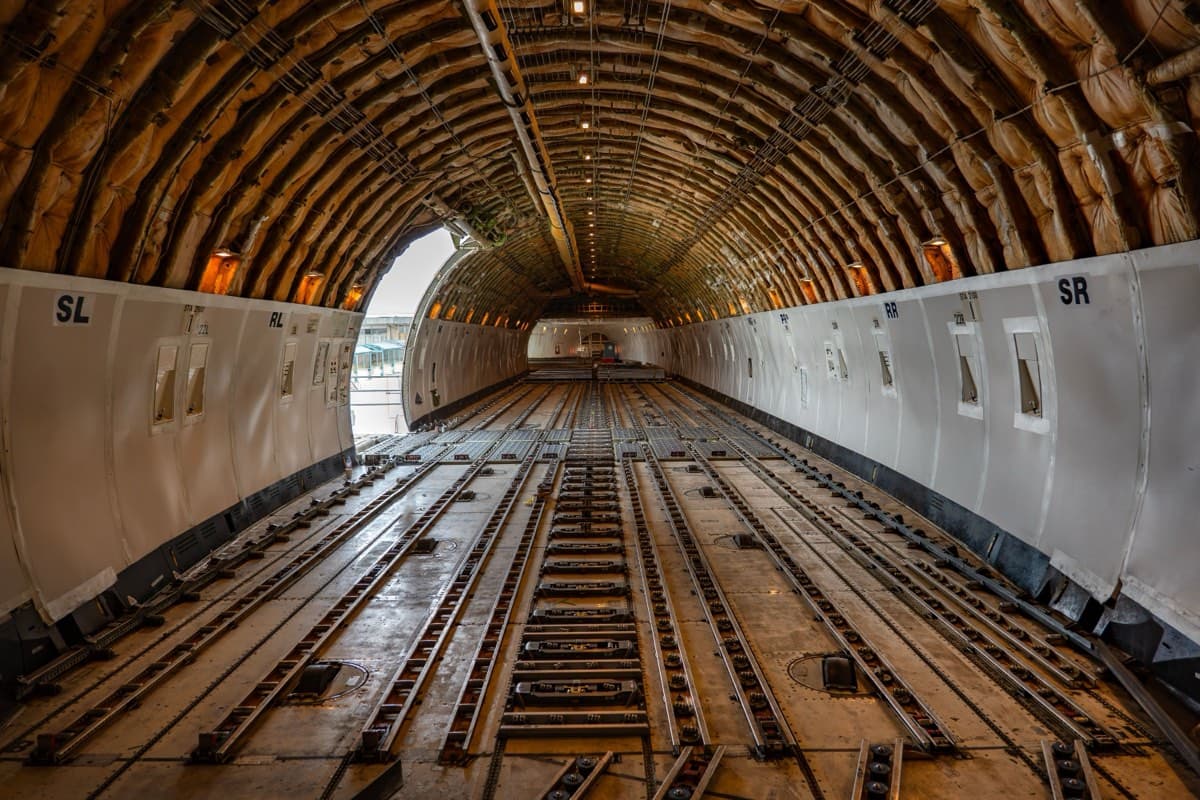
When air freight wins
Air is the right call when time has a dollar value attached to it:
- Restock SKUs that are about to go out of stock — a stockout on Amazon or your D2C store often costs more in lost sales and ranking than the air premium.
- High-value, low-weight goods — electronics components, jewellery, pharma, and precision parts where the freight cost is a small fraction of product value.
- Perishables and time-sensitive goods — fresh produce, flowers, certain pharmaceuticals, and anything with a shelf life measured in days.
- Sample shipments and urgent contractual deadlines — trade show booths, first orders for a new buyer you don't want to disappoint, or penalty clauses for late delivery.
- Emergency replenishment — when a planned ocean shipment is delayed and a customer commitment is at risk, air freight in a smaller quantity can bridge the gap.
When ocean freight wins
Ocean is the right call for the majority of commercial volume:
- Bulk and heavy cargo — furniture, machinery, textiles in volume, building materials — where per-kg cost dominates the decision.
- Non-urgent, planned inventory — anything ordered against a forecast with 4-6 weeks of lead time already built in.
- Large volumes where FCL pricing kicks in — once a shipment fills or nearly fills a container, ocean's cost advantage widens further.
- Lower-value goods — commodities and low-margin products where an air premium would erase the margin entirely.
- Sustainability-conscious buyers — ocean freight's carbon footprint per tonne-km is a fraction of air's, which increasingly matters for corporate buyers with emissions targets.
Customs and documentation: similar paperwork, different clocks
Both modes need broadly the same documents — commercial invoice, packing list, correct HS codes, and a certificate of origin where the destination requires one. The practical difference is timing pressure. Air shipments often clear customs within hours of arrival, so a documentation error causes a delay measured in days against a shipment you paid a premium to expedite. Ocean shipments have more built-in slack — a clearance delay of a few days on a 30-day voyage stings far less, though demurrage and detention charges can still add up if paperwork issues drag on at the port.
Having your HS codes, invoice values, and product certifications (FDA, CE, BIS, etc.) sorted before departure is the single biggest lever for avoiding delays on either mode — it just costs more when it goes wrong at air rates.
The hybrid approach: use both
Most experienced exporters don't pick one mode — they split volume by SKU velocity and value:
- Fast-moving, high-value SKUs ship by air in small, frequent batches to keep working capital low and stockouts rare.
- Bulk, predictable, lower-value inventory ships by ocean on a planned cadence, timed to arrive before the previous batch runs out.
- A buffer strategy: place the ocean order first for the bulk of demand, then use a smaller air shipment to cover the gap if ocean transit runs long or demand spikes unexpectedly.
This hybrid model costs more per unit on the air-shipped portion but usually lowers total landed cost and stockout risk compared to shipping everything by one mode.
A simple decision framework
Ask these three questions in order:
- Does the shipment have a real deadline (contract, event, stockout risk) that a 4-6 week wait would breach? If yes, lean air.
- What's the freight cost as a percentage of product value? Under 5% at air rates, air is often worth it. Above 15-20%, ocean almost always wins unless question 1 says otherwise.
- What's the volumetric weight, not just the actual weight? Recalculate before comparing quotes — bulky, lightweight cargo can flip the math entirely in ocean's favour.
The bottom line
Ocean freight should be your default for planned, bulk, non-urgent cargo — it's cheaper by an order of magnitude and the cost advantage grows with volume. Air freight earns its premium when speed prevents a bigger cost: a stockout, a missed deadline, or a spoiled shipment. The best-run supply chains don't treat this as a one-time decision; they split SKUs by velocity and value, use ocean for the bulk of their volume, and keep air freight in reserve for the shipments where time is genuinely worth more than money. If you're unsure which bucket a shipment falls into, get a landed-cost comparison — including duties, volumetric weight, and destination charges — for both modes before you book.